


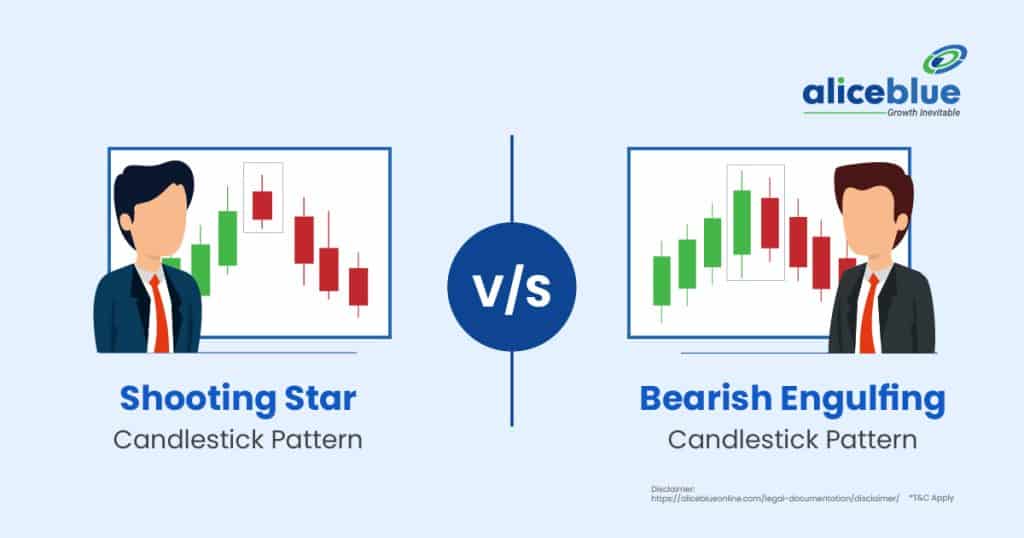
Shooting Star and Bearish Engulfing are bearish reversal patterns. The Shooting Star is a single-candle formation, while Bearish Engulfing consists of two candles, indicating stronger selling pressure. Both signal potential trend reversals, requiring confirmation for effective trading decisions.
Content:
- Shooting Star Meaning
- Bearish Engulfing Meaning
- Difference Between Shooting Star and Bearish Engulfing Candlestick Pattern
- Characteristics of Shooting Star
- Characteristics of Bearish Engulfing
- How to Identify a Shooting Star Pattern?
- How to Identify a Bearish Engulfing Candlestick Pattern?
- Trading Strategies for Shooting Star
- Trading Strategies for Bearish Engulfing
- Difference Between Shooting Star and Bearish Engulfing – Quick Summary
- Shooting Star vs Bearish Engulfing Candlestick Pattern – FAQs
Shooting Star Meaning
The Shooting Star is a bearish reversal candlestick pattern that appears after an uptrend. It has a small real body near the low, a long upper wick and little to no lower wick, indicating rejection of higher prices and potential selling pressure.
Traders interpret the Shooting Star as a sign of weakening bullish momentum. The long upper shadow shows buyers pushing prices up, but sellers regain control, closing near the opening price. Confirmation with the next candle closing lower strengthens the bearish reversal signal.

Bearish Engulfing Meaning
The Bearish Engulfing pattern is a two-candle bearish reversal formation appearing after an uptrend. The first candle is bullish, followed by a larger bearish candle that completely engulfs the previous one, signalling strong selling pressure and a potential trend reversal.
This pattern indicates a shift in market sentiment, where buyers initially control the price, but sellers take over with significant strength. A confirmed downtrend follows if the next candle continues lower, making it a reliable signal for traders anticipating bearish momentum.
Difference Between Shooting Star and Bearish Engulfing Candlestick Pattern
The main difference between the Shooting Star and Bearish Engulfing patterns lies in their structure and confirmation. The Shooting Star is a single-candle pattern with a long upper wick, while Bearish Engulfing is a two-candle pattern where a bearish candle completely engulfs a prior bullish candle.
| Aspect | Shooting Star | Bearish Engulfing |
| Structure | A single candle with a small body and long upper wick. | A two-candle pattern where the second bearish candle engulfs the first bullish candle. |
| Confirmation | Requires a bearish candle closing below its low for validation. | Stronger reversal confirmation if the next candle continues downward. |
| Indication | Suggests buyers attempted control but failed, leading to bearish pressure. | Signals a shift from bullish to bearish sentiment with strong selling dominance. |
| Occurrence | Appears after an uptrend, signalling a potential reversal. | Forms after an uptrend, indicating a significant bearish reversal. |
Characteristics of Shooting Star
The main characteristic of the Shooting Star pattern is its distinct structure, which signals a potential bearish reversal. It has a small real body near the low, a long upper wick and little to no lower wick, showing strong rejection of higher prices.
- Long Upper Wick: The long upper shadow indicates that buyers pushed the price higher, but sellers regained control, forcing the price to close near its opening level, signalling a bearish sentiment.
- Small Real Body: The small body near the low of the candle shows a struggle between buyers and sellers, where the final control shifts towards the bears, weakening the bullish momentum.
- Minimal or No Lower Wick: The absence of a lower wick signifies that the price didn’t recover after sellers took control, reinforcing the potential for a downward move if confirmed by the next candle.
- Occurs After an Uptrend: The Shooting Star appears after a price uptrend, signalling a possible reversal. Traders look for additional confirmation, such as a bearish candle closing lower, to validate the bearish outlook.
Characteristics of Bearish Engulfing
The main characteristic of the Bearish Engulfing pattern is its strong reversal signal, which appears after an uptrend. It consists of a smaller bullish candle followed by a larger bearish candle that completely engulfs the previous one, indicating a shift in market sentiment toward selling pressure.
- Complete Bearish Takeover: The second candle completely engulfs the first bullish candle, showing strong selling pressure. This signals that sellers have gained control, potentially leading to further downside movement if confirmed by subsequent price action.
- Larger Second Candle: The second bearish candle is significantly larger, indicating increased volatility and aggressive selling. The bigger the bearish candle, the stronger the reversal potential.
- Close Below Previous Candle’s Open: The bearish candle closes below the first candle’s open, confirming a strong rejection of higher prices. This reinforces the bearish sentiment and potential trend reversal.
- Stronger When Volume Increases: If the pattern forms with high trading volume, it adds reliability to the bearish reversal signal, as it indicates strong conviction among traders shifting towards selling.
How to Identify a Shooting Star Pattern?
To identify a Shooting Star pattern, look for a single candlestick appearing after an uptrend. It has a small real body near the low, a long upper shadow and little to no lower shadow, indicating rejection of higher prices and potential reversal.
The long upper wick signals strong buying pressure that was later overcome by sellers, pushing the price back down. The bearish confirmation comes if the next candle closes lower, reinforcing the likelihood of a downward trend following the Shooting Star formation.

How to Identify a Bearish Engulfing Candlestick Pattern?
To identify a Bearish Engulfing pattern, look for two candles at the end of an uptrend. The first is a small bullish candle, followed by a larger bearish candle that completely engulfs the previous one, signalling a potential trend reversal.
The second candle should open higher but close lower than the first candle’s open, showing strong selling pressure. Confirmation comes if the next candle continues downward, reinforcing the bearish sentiment and increasing the likelihood of a further price decline.

Trading Strategies for Shooting Star
The main strategy for trading the Shooting Star pattern involves confirming the reversal with the next candle. Traders look for bearish confirmation before entering short positions. Risk management, stop-loss placement and volume analysis help enhance the effectiveness of this pattern in trading strategies.
- Confirmation with Follow-Up Candle: Wait for the next candle to close below the Shooting Star’s low before entering a short position. This confirms the reversal and reduces the risk of false signals, ensuring a stronger bearish continuation.
- Using Resistance Levels: Identify strong resistance zones where the Shooting Star forms. If the price struggles to break above and forms the pattern, it strengthens the bearish signal, making it a good entry point for short trades.
- Stop-Loss Placement: Place a stop-loss slightly above the high of the Shooting Star to manage risk effectively. This prevents large losses if the market unexpectedly reverses and continues in the previous uptrend.
- Volume Analysis: A Shooting Star with high volume indicates stronger selling pressure. If the formation occurs with increased volume, it confirms a strong rejection of higher prices, making the bearish signal more reliable for entering a trade.
Trading Strategies for Bearish Engulfing
The main strategy for trading the Bearish Engulfing pattern is to confirm the downtrend before entering a short trade. Traders use support levels, RSI divergence and stop-loss techniques to maximize effectiveness while minimizing risk in volatile market conditions.
- Waiting for Breakdown Confirmation: Traders should wait for the price to break below the engulfing candle’s low to confirm the bearish trend. Entering too early without confirmation increases the chances of getting caught in a false signal or temporary pullback.
- Support Level Consideration: The pattern is stronger when it forms near a key resistance or trendline. If the price fails to break above resistance and forms a Bearish Engulfing, it confirms strong selling pressure and signals a good short entry.
- Using RSI for Divergence: If the RSI shows overbought conditions or bearish divergence when a Bearish Engulfing pattern forms, it increases the likelihood of a price reversal. Traders can use this as additional confirmation before placing a trade.
- Placing Protective Stop-Loss: A stop-loss should be set slightly above the engulfing candle’s high to manage risk. This prevents unnecessary losses in case of a sudden reversal and allows traders to protect their capital effectively.
Difference Between Shooting Star and Bearish Engulfing – Quick Summary
- The Shooting Star candlestick pattern is a bearish reversal signal that appears at the top of an uptrend. It has a small real body, a long upper wick and little to no lower wick, indicating selling pressure.
- The Bearish Engulfing pattern is a strong bearish reversal signal where a larger red candle completely engulfs the previous green candle. It forms at the top of an uptrend and suggests a shift from buying to selling pressure.
- The main difference lies in their formation. A Shooting Star has a single candlestick with a long upper wick, while a Bearish Engulfing pattern consists of two candles, with the second engulfing the first entirely.
- The Shooting Star has a small real body near the low, a long upper shadow and appears after an uptrend. It signals a failed attempt by buyers to push the price higher, leading to a potential reversal.
- The Bearish Engulfing pattern has a large bearish candle that engulfs the previous bullish candle, forming at the resistance levels. It indicates increasing selling pressure and a strong shift in momentum from buyers to sellers.
- A Shooting Star appears after an uptrend with a small body and a long upper wick. The price initially rises but faces strong resistance, closing near the open, signalling a bearish reversal.
- A Bearish Engulfing pattern occurs in an uptrend where a large bearish candle completely engulfs the previous bullish candle. It suggests a shift in control from buyers to sellers, indicating a potential trend reversal.
- Traders wait for confirmation, such as a bearish candle after the Shooting Star, before entering a short position. Stop-loss is placed above the high and support levels or technical indicators are used for confirmation.
- Traders confirm the pattern with volume increase and bearish follow-through. Entry is made below the engulfing candle’s low, with stop-loss above its high. RSI and moving averages help validate the downtrend for safer trading.
- Open a free demat account with Alice Blue in 15 minutes today! Invest in Stocks, Mutual Funds, Bonds & IPOs for Free. Also, trade at just ₹ 20/order brokerage on every order.

Shooting Star vs Bearish Engulfing Candlestick Pattern – FAQs
1. What Is The Difference Between Shooting Star and Bearish Engulfing?
The main difference is that the Shooting Star is a single-candle pattern signalling a bearish reversal, while the Bearish Engulfing consists of two candles, whereas the second bearish candle engulfs the first, confirming strong selling pressure and trend reversal.
2. What Is A Shooting Star Pattern?
A Shooting Star is a single-candle bearish reversal pattern appearing after an uptrend. It has a small body, a long upper wick and little to no lower wick, indicating rejection of higher prices and potential downward movement.
3. What Is Bearish Engulfing Meaning?
Bearish Engulfing is a two-candle bearish reversal pattern forming after an uptrend. The first candle is bullish, followed by a larger bearish candle that engulfs the previous one, indicating strong selling pressure and a possible downtrend.
4. Is The Shooting Star Pattern Reliable?
The Shooting Star pattern is reliable when confirmed with volume and technical indicators like resistance levels or RSI divergence. However, it requires further confirmation through the next candle’s price action to ensure a strong bearish reversal.
5. What Happens After A Shooting Star Pattern?
After a Shooting Star pattern, the price often declines as selling pressure increases. If the next candle closes lower, it confirms a bearish reversal, potentially leading to a trend change or a temporary pullback in an uptrend.
6. What Happens After A Bearish Engulfing Candlestick Pattern?
After a Bearish Engulfing pattern, the price typically drops, as sellers gain control. If accompanied by high volume, it strengthens the bearish signal, increasing the chances of a continued downtrend or correction in price action.
7. Is Bearish Engulfing A Stronger Signal Than Shooting Star?
Bearish Engulfing is generally considered stronger than a Shooting Star because it involves two candles, showing a clear shift in momentum. The engulfing nature indicates stronger selling pressure, whereas the Shooting Star needs confirmation for a reliable bearish reversal.
8. What Does A Shooting Star Pattern Indicate?
A Shooting Star pattern indicates a potential trend reversal from bullish to bearish. It suggests that buyers attempted to push prices higher but faced strong selling pressure, leading to a close near the opening price, signalling weakness.
9. What Is The Opposite Of The Bearish Engulfing Pattern?
The opposite of the Bearish Engulfing pattern is the Bullish Engulfing pattern. It forms after a downtrend, where a strong bullish candle completely engulfs the previous bearish candle, signalling a potential upward reversal.
10. Can Shooting Star and Bearish Engulfing Occur In Both Uptrends And Downtrends?
The Shooting Star and Bearish Engulfing typically form in uptrends, signalling reversals. However, in downtrends, they may act as continuation patterns, reinforcing bearish momentum if they appear at resistance levels or key retracement zones.
We hope you’re clear on the topic, but there’s more to explore in stocks, commodities, mutual funds, and related areas. Here are important topics to learn about.
Disclaimer: The above article is written for educational purposes and the companies’ data mentioned in the article may change with respect to time. The securities quoted are exemplary and are not recommendatory.





