


Vega impacts your option trades by showing how much an option’s price will change if market volatility changes by one percent. Higher vega means option prices react more to volatility. This affects both profits and losses depending on market movements and volatility expectations.
Contents:
- What Is Vega?
- Why Vega Matters In The Indian Options Market?
- How Vega Affects Different Types Of Options?
- How Volatility Impacts Vega In Indian Markets?
- Vega And Option Premiums
- Trading Strategies Based On Vega
- Managing Vega Risk In Options Trading
- How Vega Impacts Your Option Trades In The Indian Market? – Quick Summary
- Vega In Options Trading – FAQs
What Is Vega?
Vega is a measure that shows how much an option’s price changes when market volatility changes by one percent. It helps traders know how sensitive an option is to volatility. Higher vega means bigger price movements, while lower vega shows smaller price movements.
Vega plays a key role in option pricing. It rises when the market expects higher volatility and falls when volatility drops. Options with more time left, like long-term options, have higher vega compared to short-term options. Traders use vega to estimate how option prices may react to news, events, or market uncertainty. If volatility increases after buying an option, vega helps increase the option’s value. If volatility drops, the option’s value may reduce even if the stock price stays unchanged. Vega helps manage such risks.

Why Vega Matters In The Indian Options Market?
Vega matters in the Indian options market because it helps traders understand how much option prices will change when volatility changes. It directly affects premiums and helps traders manage the effect of news, events, and market uncertainty on option values.
- Volatility Drives Option Premiums: In India, events like elections, RBI policy changes, or budget announcements increase market volatility. Vega helps traders measure how these events can change option prices. When volatility rises, option premiums usually increase. This allows traders to adjust their positions early and capture better prices during volatile periods.
- Higher Vega in Long-Dated Options: Options with longer expiry dates in India, like quarterly or yearly options, have higher vega. This means their prices react more to volatility compared to weekly or monthly options. Traders planning long-term strategies must watch vega closely. It helps them estimate possible premium changes due to volatility shifts.
- Impact on Hedging Strategies: Many Indian traders use options for hedging. Vega becomes important here because rising volatility increases option premiums. This helps hedgers get better protection. On the other hand, falling volatility reduces protection value. Knowing vega helps traders select the right options for better risk management.
- Effect on Intraday and Short-Term Traders: Intraday and short-term options traders also watch vega as part of their strategy. Even small changes in volatility can change option premiums sharply. Understanding vega helps traders avoid sudden losses or missed opportunities caused by unexpected premium movements during the trading day.
- Relevance During News-Driven Markets: Indian markets often react strongly to corporate results, government decisions, or global news. These events create sudden volatility spikes. Vega shows how much option premiums will react to these changes. Traders who understand vega can plan entries and exits better during such news-based movements.
- Helps Price Option Spreads Correctly: Traders using option spreads like straddles or strangles must factor in vega. Vega tells how both legs of the spread will behave when volatility changes. Ignoring vega may lead to lower-than-expected profits or even losses. Smart traders in India use vega to fine-tune their spread pricing.
- SEBI and Market Regulations Impact Volatility: In India, SEBI rules and exchange-level decisions often cause sudden volatility changes. Vega helps traders prepare for such changes. Whether it is a change in margin rules or FII activity guidelines, vega plays a key role in adjusting option pricing and managing trades effectively.
Suggested read: Options Trading For Beginners – Key Metrics To Analyze Before Placing A Trade
How Vega Affects Different Types Of Options?
Vega affects different types of options by changing their prices based on how much time they have and how close they are to the strike price. Long-term and at-the-money options show stronger reactions to changes in volatility compared to others.
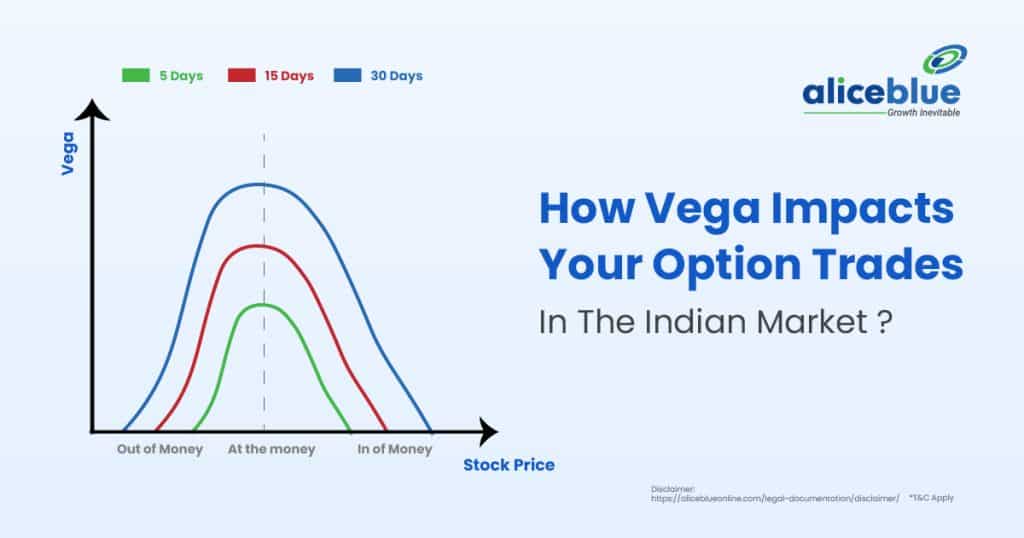
- Vega Impact on At-the-Money Options: At-the-money options have the highest vega because their premium is most sensitive to any change in volatility. In India, traders often use ATM options during big events. Even a small rise in volatility can increase their value quickly. This makes ATM options popular for short-term volatility trades.
- Vega in Out-of-the-Money Options: Out-of-the-money options have lower premiums and smaller vega. Their value increases less when volatility rises. Indian traders use them in strategies like strangles or directional bets. While they are cheaper to buy, they don’t gain much from volatility unless the market moves strongly in their direction.
- In-the-Money Options and Vega Sensitivity: In-the-money options have lower vega compared to ATM options but higher than far OTM options. These options are already valuable due to their intrinsic value. Volatility still affects them but to a lesser extent. Traders use them when they want more stable premium movements during moderate volatility.
- Effect on Long-Term Options (LEAPS): Long-term options in India, also known as LEAPS, have high vega because they have more time for market changes to occur. Their prices change a lot with shifts in implied volatility. Investors planning long trades often monitor vega closely when entering or adjusting these positions.
- Short-Term Options React Differently: Short-term options have low vega because there’s limited time for volatility to make an impact. Indian traders use weekly contracts for fast trades, but price changes from volatility are minimal. These options respond more to price direction than to changes in implied volatility.
- Vega Impact During Expiry Week: In expiry week, vega drops sharply as time value reduces. Traders in India often avoid high vega trades during this period. Any change in volatility has a limited effect on premiums. This forces traders to shift focus from volatility-based strategies to pure directional trades.
- Combination Strategies and Vega Role: Strategies like iron condors, straddles, and spreads combine options with different vegas. In India, traders use these to manage volatility better. Knowing how vega works in each leg helps avoid imbalance. This improves the chances of stable profits even when the market moves unexpectedly.
How Volatility Impacts Vega In Indian Markets?
Volatility impacts vega in Indian markets by increasing the option’s sensitivity to price changes. When volatility rises, vega goes up, causing option premiums to increase. This affects the profit or loss potential for both buyers and sellers of options across market conditions.
- High Volatility Raises Vega Values: When volatility goes up in India due to events like elections or global news, vega also rises. This causes option premiums to increase quickly. Traders who bought options benefit from this spike while sellers face a rise in risk. Timing becomes important when volatility is expected to change.
- Falling Volatility Lowers Vega Impact: When markets calm down after a volatile period, vega starts dropping. This lowers the option premiums even if the underlying price stays the same. Traders holding options may lose value due to this drop in vega. This is known as volatility crush after major events.
- Volatility Moves Faster in Small Caps: In India, small-cap stocks usually face more price swings than large caps. Options on such stocks show higher vega values. Traders dealing with these contracts must track volatility more closely. A quick jump in price can lead to bigger changes in premium due to high vega.
- Impact of Implied vs Realised Volatility: Implied volatility reflects what traders expect while realised volatility shows actual price movements. If implied volatility is much higher than realised, options may be overpriced. Vega helps traders assess this gap and take positions based on expected corrections in volatility levels.
- Volatility During Major Economic Announcements: Announcements like RBI policies or Union Budget often raise volatility in Indian markets. This boosts vega and pushes up option premiums before the event. Once the event ends, volatility drops and so does vega. Traders often adjust their positions before and after such periods.
- Vega and Sector-Specific Volatility: Different sectors in India react differently to news. For example, banking and IT stocks often see sudden movements. Options in these sectors carry higher vega. Traders focusing on these must be aware that sector-based volatility can increase or decrease vega sharply within short periods.
- Effect on Option Writing Strategies: Option sellers or writers are directly affected when volatility spikes. Higher vega increases their risk. In India, many traders sell options for income. During volatile times, they face rising premium liabilities. Understanding vega helps them decide whether to reduce exposure or shift strategies.
Suggested read: Best Indicators For Options Trading And How To Use Them Effectively?
Vega And Option Premiums
Vega shows how much an option premium will change if implied volatility moves by one percent. It helps traders measure the effect of volatility on option pricing. A higher vega means the premium will rise or fall more when volatility changes in the market.
Option premiums depend not just on price and time but also on volatility. Vega connects volatility with premium changes. When market volatility increases, options become more expensive. Buyers benefit from rising premiums if they already hold the option. Sellers, however, face more risk as vega increases losses. Options with more time left usually have higher vega and show bigger premium changes. In India, during high-volatility periods like earnings season or major events, vega plays a big role in deciding how expensive or cheap an option becomes.
Trading Strategies Based On Vega
Trading strategies based on vega focus on using changes in volatility to earn profits. These strategies depend on whether a trader expects volatility to rise or fall. Vega helps choose the right option structure depending on market conditions and upcoming events.
- Buy Options Before Expected Volatility Rise: When traders expect events like budget announcements or company results to increase volatility, they buy options. As vega rises, the premium also increases. Even if the stock price stays flat, the trader may gain from the rise in vega. This works well during event-heavy weeks.
- Sell Options When Volatility Is Expected To Fall: If a trader expects market volatility to cool down, they sell options with high premiums. As vega drops, the premium falls, giving profit to the seller. This strategy suits stable market periods. It works best when traders avoid major events or sharp price movements.
- Use Long Straddle for High Vega Gains: A long straddle involves buying a call and a put at the same strike. It benefits when volatility rises sharply. Traders use this when they expect big movements but don’t know the direction. Rising vega pushes both premiums up, helping the position earn profits.
- Use Short Straddle When Volatility Is High: Short straddles involve selling a call and a put at the same strike. Traders use this when volatility is high and expected to fall. As vega drops, both premiums reduce. However, this strategy needs close tracking as losses can rise if the stock moves sharply.
- Choose Longer Expiry for Higher Vega Impact: Options with longer expiry dates have higher vega. Traders expecting a slow but steady rise in volatility choose these contracts. The premium reacts more to vega changes. This helps when the event or volatility trigger is expected a few weeks away from the current date.
- Avoid High Vega Trades in Expiry Week: During expiry week, vega has little impact on premiums as time value drops. Traders avoid volatility-based strategies during this time. Any change in volatility will not move premiums much. Directional moves take over and traders shift to price-based setups instead of vega-based ones.
- Combine Vega with Delta for Balanced Trades: Traders often combine vega with delta to manage risk and reward. While delta tracks price movement, vega tracks volatility impact. In India, many traders build spreads with one high vega leg and one low vega leg to balance movement and control risk during uncertain markets.
Managing Vega Risk In Options Trading
Managing vega risk in options trading means handling how volatility changes affect option premiums. Traders use specific strategies to reduce the impact of rising or falling vega and protect their trades from unexpected premium changes due to sharp movements in market volatility.
- Avoid Holding Options Before Major Events: Traders avoid carrying large open option positions before events like RBI policy, budget, or election results. These events cause sharp volatility spikes. A sudden rise or fall in vega can lead to quick premium changes and losses. Reducing exposure helps control risk during uncertain periods.
- Use Spreads Instead of Naked Options: Spreads like bull call or bear put spreads involve buying one option and selling another. This reduces the impact of vega as the two options balance each other. If volatility changes, the gain in one leg partly offsets the loss in the other, managing vega risk better.
- Monitor Implied Volatility Before Entry: Traders check implied volatility levels before entering trades. If IV is already high, they avoid buying options as vega risk is higher. In such cases, option premiums may fall even if the market moves, leading to losses. Entering trades during moderate IV helps reduce this risk.
- Select Expiry Based on Volatility Outlook: Traders choose expiry dates based on their view of volatility. Short-term options have lower vega and react less to volatility. Long-term options carry more vega. If traders expect stable markets, they prefer shorter expiry. If they expect volatility, longer expiry suits better to benefit from vega.
- Adjust Positions as Vega Changes: Traders actively adjust their positions as vega changes. If volatility rises more than expected, they may reduce exposure or shift to spreads. If it drops, they may book profits or cut losses early. This helps protect capital and maintain control over risk in fast-moving markets.
- Track India VIX to Anticipate Vega Movements: India VIX reflects expected market volatility. Traders use it to estimate vega changes. A rising VIX means vega may go up, affecting option prices. Watching VIX helps traders prepare for premium changes and manage trades more effectively, especially during news-driven or uncertain market phases.
- Don’t Over-Leverage on High Vega Trades: Traders avoid putting too much capital into high vega trades. Sudden volatility changes can wipe out premiums fast. Keeping trade size small during such setups helps avoid large losses. Risk stays limited even if vega moves against the trade after entry.
How Vega Impacts Your Option Trades In The Indian Market? – Quick Summary
- Vega impacts option trades by changing option prices when market volatility moves. It helps traders understand how sensitive their trades are to changes in volatility conditions.
- Vega measures how much an option premium changes when volatility moves by one percent. It increases with more time and reduces as expiry comes closer.
- The main importance of vega in Indian markets is its role in tracking how events like budget or RBI policies affect option premiums and help traders handle sudden price changes.
- Vega affects different types of options differently. At-the-money and long-dated options have higher vega while short-term and far out-of-the-money options show less impact.
- The key link between volatility and vega is that rising volatility increases vega and makes options more expensive while falling volatility reduces vega and lowers premiums.
- Option premiums move with volatility and vega helps traders measure that change. A higher vega makes option prices more sensitive to shifts in market expectations.
- Traders use vega-based strategies like buying options before major events or creating spreads when volatility is expected to change. These setups help in planning profitable entries.
- Managing vega risk means using spreads and position sizing to reduce premium losses from sudden volatility changes. Traders also track India VIX and expiry to adjust their trades.
- Plan your next options trade with vega in mind and trade confidently in Indian markets with Alice Blue Online by your side.

Vega In Options Trading – FAQs
1. What Is Vega In Options Trading?
Vega in options trading tells how much an option’s premium will change when implied volatility moves by one percent. It helps traders understand the link between volatility and option price changes during market swings.
2. How Does Vega Impact Option Prices?
Vega directly changes option prices based on volatility levels. When implied volatility rises, premiums increase. When it falls, premiums drop. High vega increases the effect of volatility on both calls and puts.
3. Why Is Vega Important In Volatile Markets?
Vega is important in volatile markets because sudden news or events cause rapid changes in option premiums. Understanding vega helps traders prepare for sharp price swings and manage positions more safely.
4. How Does Vega Affect Call And Put Options?
Vega affects call and put options equally. A rise in implied volatility increases premiums of both. A drop in volatility lowers both prices, regardless of whether the stock goes up or down.
5. What Is The Relationship Between Vega And India Vix?
India VIX shows expected market volatility. When VIX rises, it usually leads to higher vega values, which increases option premiums. When VIX falls, vega decreases and premiums tend to shrink quickly.
6. How Can Traders Use Vega To Their Advantage?
Traders use vega to time option entries and exits. They buy options when volatility is expected to rise and sell when it’s high. Managing vega helps traders improve profitability and reduce losses.
7. Which Option Strategies Benefit From High Vega?
High vega benefits strategies like long straddles, long strangles, or simple long calls and puts. These setups work well during events like earnings, budget announcements, or major global economic news.
8. How Does Vega Change As Options Near Expiry?
Vega reduces as options near expiry because there’s less time for volatility to affect the premium. Options become more price-sensitive than volatility-sensitive, making vega-based trades less useful during expiry week.
9. How Does Vega Affect Deep ITM Or OTM Options?
Deep ITM and OTM options have lower vega because their value depends more on intrinsic value. Volatility changes affect them less than at-the-money options, which show the strongest vega reaction.
10. How To Manage Vega Risk In Options Trading?
To manage vega risk, traders avoid high-volatility entries, use spreads, reduce position size, and track implied volatility. This keeps trades safer from sudden premium drops caused by falling market volatility.
We hope you’re clear on the topic, but there’s more to explore in stocks, commodities, mutual funds, and related areas. Here are important topics to learn about.





