
Most people think that making profits in the stock market is possible through buying stocks at a low price and selling at a high price, but there’s an investing strategy called “Short Selling” which they use to profit when stock prices fall.
Unlike traditional investing, short selling involves selling shares you don’t own, with the expectation that their price will drop.
In this blog, we explain what short selling is, how it works on trading platforms, and the risks and rewards involved for Indian stock and crypto investors.
Short selling happens when a trader sells shares that he doesn’t own at the moment. The trader borrows these shares from a broker or another investor and sells them at the current market price. The goal is to buy them back later at a lower price, returning them to the lender, and pocketing the difference as profit.
Short selling is generally practiced by experienced traders and institutional investors who can carefully analyze market trends. Because it relies on predicting a stock’s decline. It carries a high risk-to-reward ratio.
Here’s a simplified step-by-step look at how short selling works on platforms like Alice Blue:
The difference between the selling price and the buying price is your profit.
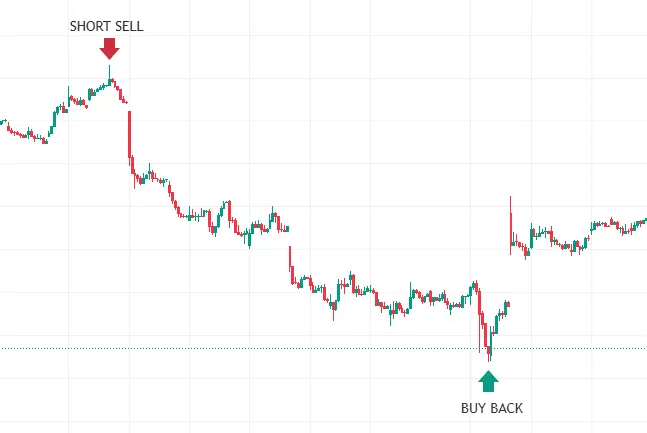
Example:
While risky, short selling offers several advantages:
Short selling is not for everyone. Key risks include:
Strategy | Goal | Risk |
Going Long | Buy low, sell high | Limited to the investment amount |
Short Selling | Sell high, buy low | Unlimited if the price rises |
Short selling can be a powerful trading strategy, but it is risky and best suited for experienced traders who understand market dynamics. Profits are possible, but losses can be extreme when the trades go sideways.
Always consider market trends, margin requirements, and company fundamentals before attempting to sell short.
Want to profit in both rising and falling markets? Get started with Alice Blue today and explore powerful trading features designed for modern traders.
In the Indian equity cash market (intraday), retail traders generally cannot carry a short position overnight. You must “square off” (buy back) your shares before the market closes. If you wish to hold a short position for days or weeks, you typically have to use the Futures & Options (F&O) segment or the Stock Lending and Borrowing (SLB) mechanism.
This is a major risk. An upper circuit means there are only buyers and no sellers at a certain price limit. If you’re short and need to buy back shares to close your position, but the stock is “locked” in an upper circuit, you won’t be able to exit. This may lead to an auction where the exchange buys the shares on your behalf at a much higher price, potentially resulting in heavy penalties and losses.
Yes, usually. Since you are borrowing an asset (shares) from a broker or through the SLB (Stock Lending and Borrowing) platform, there’s often a borrowing fee or interest rate involved. This “cost of carry” can eat into your profits if you hold the short position for an extended period.
Not necessarily. While most stocks can be shorted intraday, only stocks in the F&O segment are liquid enough for large-scale or mult-day shorting strategies. Additionally, SEBI (Securities and Exchange Board of India) occasionally moves certain stocks into a “Ban Period” or restricted lists, where new short positions cannot be initiated.
Attention Investors!
Stock Brokers can accept securities as margin from clients only by way of pledge in the depository system w.e.f. September 1, 2020. Update your mobile number & email Id with your stock broker/depository participant and receive OTP directly from the depository on your email id and/or mobile number to create a pledge. Pay 20% upfront margin of the transaction early to trade in the cash market segment. Investors may please refer to the Exchange’s Frequently Asked Questions (FAQs) issued vide circular reference NSE/INSP/45191 dated July 31, 2020, and NSE/INSP/45534 dated August 31, 2020, and other guidelines issued from time to time in this regard. Check your Securities /MF/ Bonds in the consolidated account statement issued by NSDL/CDSL every month.
Corporate Office: No. 153/2, 3rd Floor, M.R.B.Arcade, Bagalur Main Road, Dwaraka Nagar, Yelahanka, Bengaluru – 560 063, Karnataka.
Registered Office: Old No.56/2 ,New No.58, LIC Nagar, Vinayagar Kovil Street, Erode -8,Tamil Nadu– 638002.
Alice Blue Financial Services (P) Ltd : NSE EQ | NSE FO | NSE CDS-90112 SEBI REG : INZ000156038
Alice Blue Financial Services (P) Ltd : BSE EQ | BSE FO | BSE CD-6670 SEBI REG : INZ000156038
Alice Blue Financial Services (P) Ltd : CDSL DP ID 12085300 DP SEBI REG : IN-DP-364-2018
Alice Blue Financial Services (P) Ltd : MCX-56710 SEBI REG : INZ000156038
We hereby declare that we are doing PRO trading
Procedure to file a complaint on SEBI SCORES : Register on SEBI SCORES 2.0. Mandatory details for filing complaints on SCORES: Name, PAN, Address, Mobile Number, E-mail ID. Benefits: Effective Communication, Speedy redressal of the grievances
Click on the provided link to learn about the process for submitting a complaint on the ODR platform for resolving investor grievances.
Investment in securities markets are subject to market risks, read all the related documents carefully before investing. Brokerage will not exceed SEBI prescribed limit.
For queries regarding account opening or activation, email to [email protected] and for fund updates, email to [email protected]
Disclaimer : Prevent unauthorized transactions in your account. Update your mobile numbers/email IDs with your stock brokers. Receive information of your transactions directly from Exchange on your mobile/email at the end of the day. Issued in the interest of investors. All clients have to update their email id and mobile number with Member : Investor Grievance [email protected]
KYC is a one time exercise while dealing in securities markets – once KYC is done through a SEBI registered intermediary (broker, DP, Mutual Fund etc.), you need not undergo the same process again when you approach another intermediary.
No need to issue cheques by investors while subscribing to an IPO. Just write the bank account number and sign in the application form to authorise your bank to make payment in case of allotment. No worries for refund as the money remains in the investor’s account.
Investors are requested to note that Alice Blue Financial Services Private Limited is permitted to receive money from investor through designated bank accounts only named as Up streaming Client Nodal Bank Account (USCNBA). Alice Blue Financial Services Private Limited is also required to disclose these USCNB accounts to Stock Exchange. Hence, you are requested to use following USCNB accounts only for the purpose of dealings in your trading account with us. The details of these USCNB accounts are also displayed by Stock Exchanges on their website under “Know/ Locate your Stock Broker. Bank Details (Valid UPI FAQ).


