
Most people who decide to start investing in stocks get stuck at the first step, not because the process is complicated, but because they are unsure which documents they need or whether they qualify. Getting rejected for a name mismatch or an expired address proof is more common than you might expect.
If you know the eligibility criteria and required documents before you begin, the entire process takes under 30 minutes online. This guide covers: who qualifies, who does not, what you need to submit, and how special cases like minors, NRIs, and HUFs work.
Most Indian citizens qualify. The conditions are minimal, and there is no restriction based on occupation, income, or education.
Any Indian citizen aged 18 years or above can open a Demat account independently. There is no upper age limit: students, homemakers, salaried professionals, business owners, and retired individuals all qualify, provided their KYC (Know Your Customer) documents are in order.
A minor (under 18) can have a Demat account opened in their name, but the account is operated exclusively by a natural guardian (parent) or a court-appointed guardian. The minor cannot place trades or give instructions until they turn 18.
Once the minor reaches adulthood, they must submit fresh KYC documents and convert the account into a regular individual Demat account. Until that happens, all transactions are authorised solely by the guardian.
One important rule: A minor cannot be a joint holder in a Demat account under any circumstances.
NRIs and Persons of Indian Origin (PIOs) can open a Demat account in India under the Foreign Exchange Management Act (FEMA) guidelines. Their account must be linked to either an NRE (Non-Resident External) or NRO (Non-Resident Ordinary) bank account.
The difference matters: an NRE account allows full repatriation of both the principal and returns to the home country. An NRO account allows limited repatriation, up to USD 1 million per financial year, subject to tax. The choice depends on how the NRI plans to use their investment returns.
A HUF can open a Demat account. The Karta, the senior-most managing member of the family, opens and operates the account on behalf of the HUF. The account is held in the HUF’s name, not the Karta’s personal name.
The following entities are also eligible to open Demat accounts:
This is a question most beginners never think to ask, but matters, especially if you have had any financial or legal complications in the past.
You cannot open a Demat account if:
If any of the above apply to you, resolve the underlying issue first before applying.
Before you start the application, gather these documents. Having them ready avoids mid-process delays and prevents the most common reason for rejection: incomplete or mismatched paperwork.
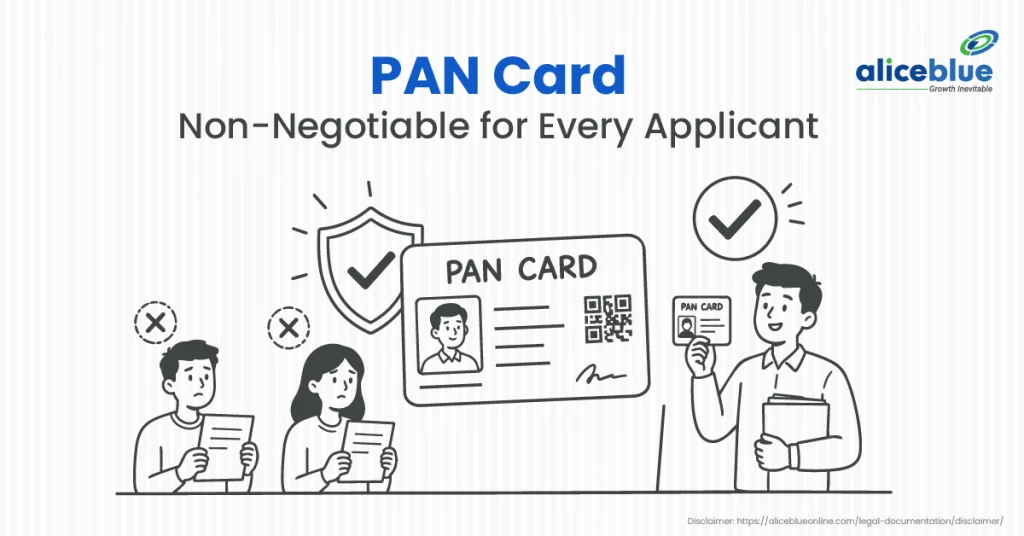
A PAN card is mandatory for every Demat account application in India without exception. SEBI requires it as the primary identity document for all securities market activity. There is no alternative to this.
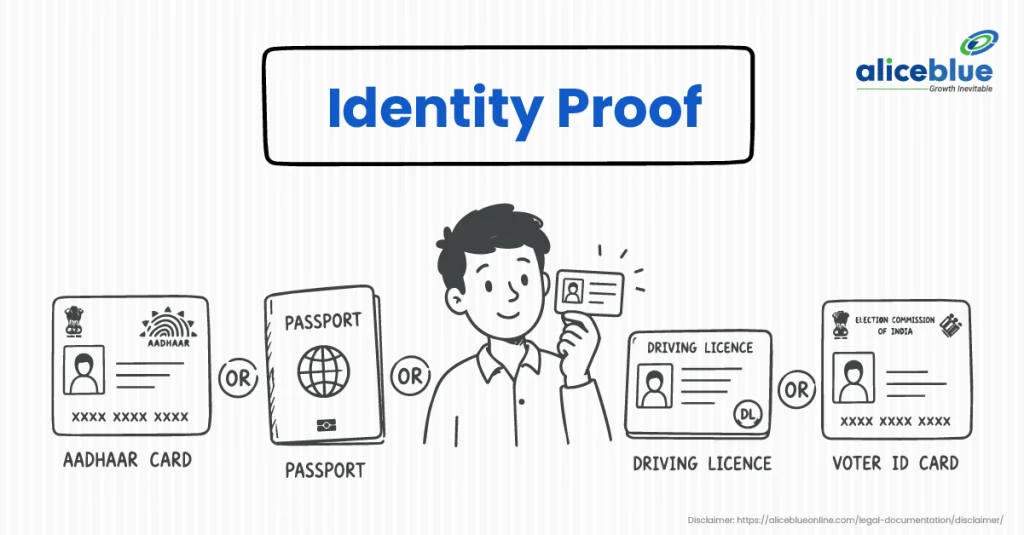
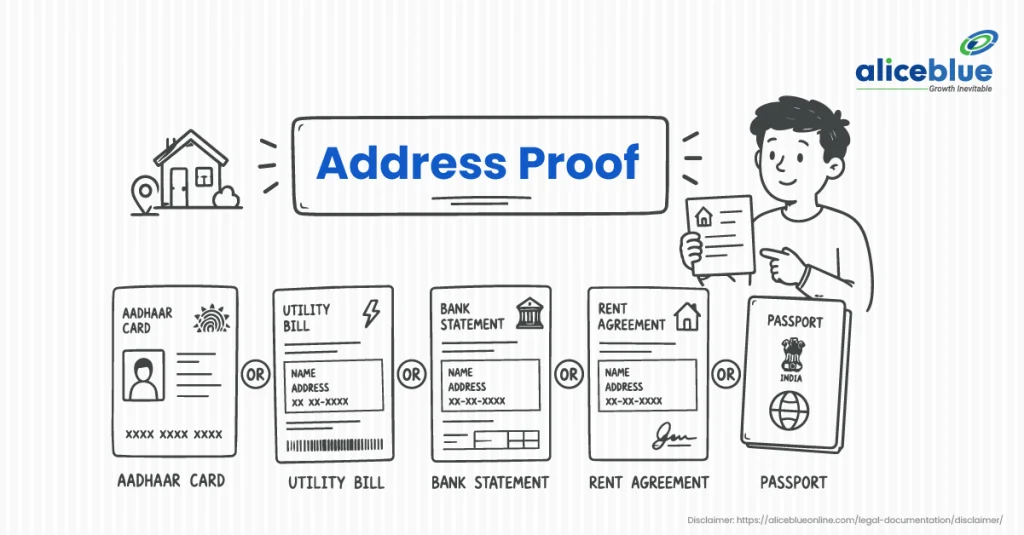
Watch out for this: The name on your address proof must match exactly with the name on your PAN card. Not approximately, exactly. “Rahul K Sharma” and “Rahul Kumar Sharma” are treated as different names in the system. This single mismatch is the most frequent reason applications are delayed or rejected.
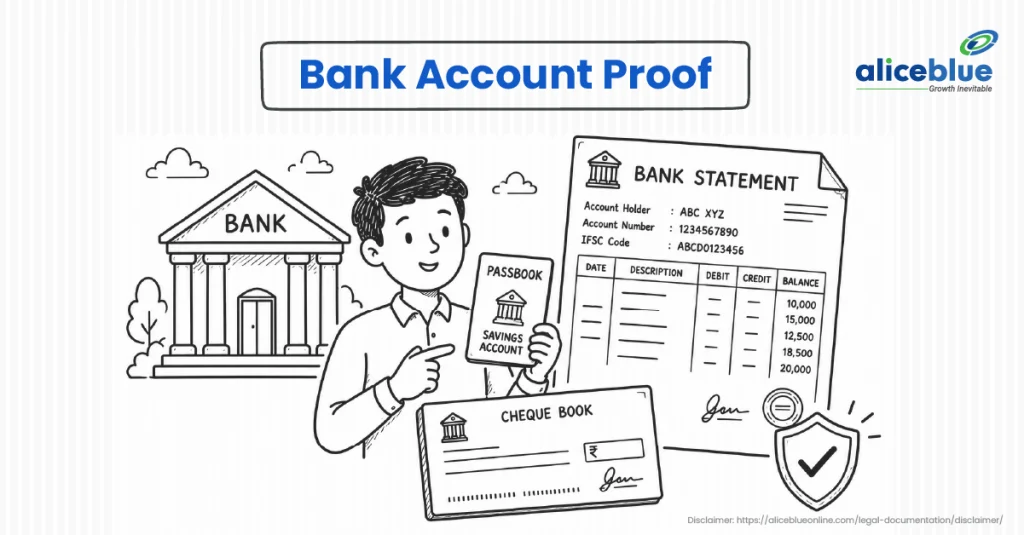
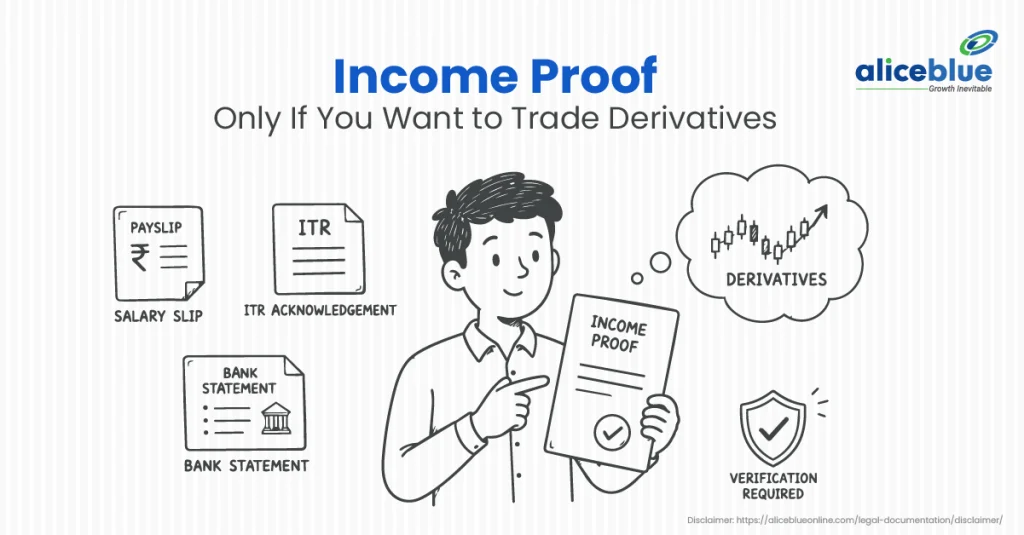
For a basic equity Demat account, proof of income is not required. You only need to submit it if you want trading access in Futures and Options (F&O), commodities, or currency derivatives.
Accepted income proof documents:
Submit income proof at the time of account opening if you already know you want F&O access. Doing it later adds an extra step.
Document | Details |
Passport | Primary identity proof |
PAN Card | Mandatory |
Overseas Address Proof | Foreign utility bill or foreign bank statement |
PIS Permission Letter | Required from RBI for equity trading on a repatriation basis |
NRE or NRO Bank Account Proof | For fund settlement, your choice depends on repatriation needs |
Notarised Foreign Address Document | Required if overseas address proof is not self-attested |
The guardian must submit their own complete KYC documents along with:
Once you have your documents ready, opening a Demat account involves these steps:
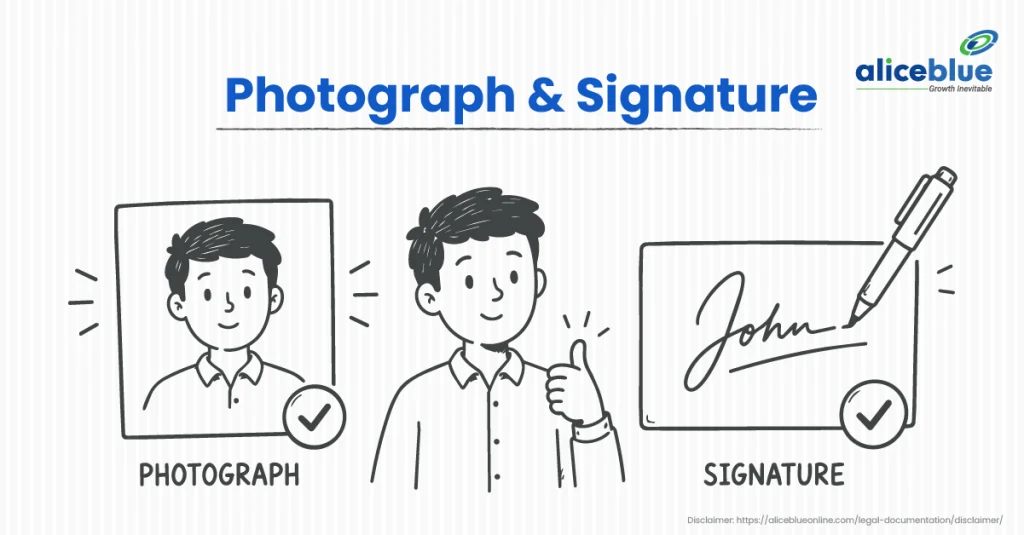
Most people pass the Demat account eligibility check on their first attempt. The required documents are minimal: PAN card, Aadhaar, a cancelled cheque, and a photograph; covering the standard process for most individuals. The delays we regularly see stem from two factors: name mismatches across documents and expired address proofs.
Sort those two things out before you start, and your account should be active within 24 hours.
Alice Blue offers a fully digital account opening process with zero paperwork, no account opening fee, and support available if you get stuck at any step. You can start investing the same day your account is activated.
If you’re planning to start investing, you can open a demat account with Alice Blue and get started.
You must be 18 years or older to open a Demat account independently. If you are under 18, a parent or court-appointed guardian opens and operates the account in your name. Once you turn 18, you need to convert it into a regular individual account.
Yes, without exception. SEBI requires PAN as the primary identity document for all securities market activity. There is no substitute or alternative accepted.
Yes, but it takes longer. Without Aadhaar, e-KYC is not possible. You will need to submit physical documents and complete in-person verification at the broker’s office or through a representative visit.
Individuals with inactive or cancelled PAN cards, persons declared insolvent by a court, and those debarred from the securities market by SEBI are not eligible.
Not for a basic equity account. Income proof is required only when you want to activate trading in Futures and Options, commodities, or currency derivatives.
A passport, PAN card, overseas address proof, a PIS permission letter from RBI, and proof of an NRE or NRO bank account. Documents may need to be notarised depending on the country of residence.
Yes. Two or more adults can hold a joint Demat account, with a maximum of three holders — one primary and two joint. The primary holder is the main account operator. Minors cannot be joint holders.
Attention Investors!
Stock Brokers can accept securities as margin from clients only by way of pledge in the depository system w.e.f. September 1, 2020. Update your mobile number & email Id with your stock broker/depository participant and receive OTP directly from the depository on your email id and/or mobile number to create a pledge. Pay 20% upfront margin of the transaction early to trade in the cash market segment. Investors may please refer to the Exchange’s Frequently Asked Questions (FAQs) issued vide circular reference NSE/INSP/45191 dated July 31, 2020, and NSE/INSP/45534 dated August 31, 2020, and other guidelines issued from time to time in this regard. Check your Securities /MF/ Bonds in the consolidated account statement issued by NSDL/CDSL every month.
Corporate Office: No. 153/2, 3rd Floor, M.R.B.Arcade, Bagalur Main Road, Dwaraka Nagar, Yelahanka, Bengaluru – 560 063, Karnataka.
Registered Office: Old No.56/2 ,New No.58, LIC Nagar, Vinayagar Kovil Street, Erode -8,Tamil Nadu– 638002.
Alice Blue Financial Services (P) Ltd : NSE EQ | NSE FO | NSE CDS-90112 SEBI REG : INZ000156038
Alice Blue Financial Services (P) Ltd : BSE EQ | BSE FO | BSE CD-6670 SEBI REG : INZ000156038
Alice Blue Financial Services (P) Ltd : CDSL DP ID 12085300 DP SEBI REG : IN-DP-364-2018
Alice Blue Financial Services (P) Ltd : MCX-56710 SEBI REG : INZ000156038
We hereby declare that we are doing PRO trading
Procedure to file a complaint on SEBI SCORES : Register on SEBI SCORES 2.0. Mandatory details for filing complaints on SCORES: Name, PAN, Address, Mobile Number, E-mail ID. Benefits: Effective Communication, Speedy redressal of the grievances
Click on the provided link to learn about the process for submitting a complaint on the ODR platform for resolving investor grievances.
Investment in securities markets are subject to market risks, read all the related documents carefully before investing. Brokerage will not exceed SEBI prescribed limit.
For queries regarding account opening or activation, email to [email protected] and for fund updates, email to [email protected]
Disclaimer : Prevent unauthorized transactions in your account. Update your mobile numbers/email IDs with your stock brokers. Receive information of your transactions directly from Exchange on your mobile/email at the end of the day. Issued in the interest of investors. All clients have to update their email id and mobile number with Member : Investor Grievance [email protected]
KYC is a one time exercise while dealing in securities markets – once KYC is done through a SEBI registered intermediary (broker, DP, Mutual Fund etc.), you need not undergo the same process again when you approach another intermediary.
No need to issue cheques by investors while subscribing to an IPO. Just write the bank account number and sign in the application form to authorise your bank to make payment in case of allotment. No worries for refund as the money remains in the investor’s account.
Investors are requested to note that Alice Blue Financial Services Private Limited is permitted to receive money from investor through designated bank accounts only named as Up streaming Client Nodal Bank Account (USCNBA). Alice Blue Financial Services Private Limited is also required to disclose these USCNB accounts to Stock Exchange. Hence, you are requested to use following USCNB accounts only for the purpose of dealings in your trading account with us. The details of these USCNB accounts are also displayed by Stock Exchanges on their website under “Know/ Locate your Stock Broker. Bank Details (Valid UPI FAQ).


